 Blog
Blog

As a native-born Israeli, Nati is happy to tell you about Jewish life, special traditions and the holidays celebrated in Israel. In this blog, he takes you on a journey through the meaning of Rosh Hashanah, the Jewish New Year. What does this special holiday mean, when is Rosh Hashanah celebrated and which traditions are associated with it? From the sound of the shofar to the well-known apple dipped in honey: discover how Jewish people welcome the new year and why these traditions are so important. Drawing on his Israeli background, Nati tells you more about these traditions and how Rosh Hashanah is experienced in Israel.
What is Rosh Hashanah?
Rosh Hashanah is the Jewish New Year and one of the most important holidays in Judaism. The Hebrew name רֹאשׁ הַשָּׁנָה (Rosh Hashanah) literally means “head of the year.” Rosh Hashanah begins on the first day of the Jewish month of Tishrei and is celebrated for two days. Because a Jewish holiday begins at sunset, Rosh Hashanah already begins on the evening before the first day. In 2026, Rosh Hashanah begins at sunset on Friday, September 11 and ends after sunset on Sunday, September 13.
Rosh Hashanah is more than just the beginning of a new year. It is also a time for reflection, prayer and self-examination. According to Jewish tradition, the holiday is associated with the creation of humanity. That is why these days are not only about celebration and spending time together, but also about reflecting on the past year and considering how we want to enter the year ahead. For Nati, that combination is characteristic of Jewish holidays: coming together with family, enjoying a festive meal and, at the same time, taking a moment to reflect on what truly matters.
When is Rosh Hashanah?
The date of Rosh Hashanah varies each year on our Western calendar. This is because the Jewish calendar is structured differently from the Gregorian calendar. Rosh Hashanah begins every year on the first day of the month of Tishrei and lasts for two days. In 2026, Rosh Hashanah falls from September 11 through September 13, with the holiday beginning on Friday evening and ending on Sunday evening. The Jewish year therefore does not begin on January 1, as it does in the Netherlands and many other countries. Rosh Hashanah marks the beginning of the new Jewish year.
How is Rosh Hashanah celebrated?
Rosh Hashanah is celebrated in the synagogue and at home with family and friends. There are special prayers, festive meals and various traditions associated with the Jewish New Year. One of the most important traditions is blowing the shofar, a ram’s horn. The sound of the shofar is a call to reflection and is an important part of the celebration. It reminds people to reflect on their actions and on the new year that lies ahead. For Nati, the shofar is a beautiful example of how an ancient tradition is still an integral part of Jewish life today. Even in modern Israel, these traditions continue to play an important role. Alongside the prayers and the shofar, the festive meal also plays an important role. Various dishes with symbolic meanings for the new year are served at the table.
What do you eat during Rosh Hashanah?
Anyone familiar with Rosh Hashanah will probably also know the tradition of apples with honey. But there are many other dishes that are eaten during the Jewish New Year. The exact dishes and customs vary between families and communities. This can also be seen clearly in Israel. Israel is home to Jewish communities from many different backgrounds, including Ashkenazi, Sephardic and Mizrahi traditions. As a result, a Rosh Hashanah meal can look quite different from one family to another. Nevertheless, certain symbolic foods are found in many homes.
Challah with honey
During Rosh Hashanah, people often eat round challah. Challah is the traditional Jewish bread that is also served during Shabbat and other holidays. The round shape is associated with the cycle of the year and of life. During Rosh Hashanah, challah is often dipped in honey rather than salt. This expresses the wish for a good and sweet new year.
Apple with honey
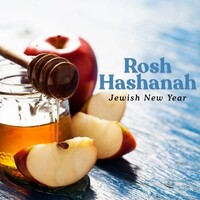
One of the best-known Rosh Hashanah traditions is eating apples with honey. The apple is dipped in honey as a symbol of the wish for a good and sweet new year. For many Jewish families, this is a regular part of the first festive meal. It is a simple tradition, but precisely because of that, it has become one of the most recognizable symbols of the Jewish New Year.
Pomegranate
The pomegranate also has a special meaning during Rosh Hashanah. Its many seeds are associated with abundance and with the wish to perform many good deeds and mitzvot in the coming year. A mitzvah is a Jewish commandment. The plural is mitzvot. The pomegranate therefore symbolizes the wish to fill the new year with good deeds. It is sometimes said that a pomegranate contains 613 seeds, corresponding to the traditional number of mitzvot in the Torah. However, this is mainly a symbolic reference; the actual number of seeds varies from one pomegranate to another.
The head of a fish or ram
In some Jewish communities, the head of a fish, ram or another kosher animal is eaten during Rosh Hashanah. This is accompanied by the wish to be “the head and not the tail.” The idea behind this is to begin the new year in a positive way and move forward. Which symbolic foods are eaten varies between communities. These differences are precisely what make Jewish holiday traditions so diverse.
Why are the foods eaten during Rosh Hashanah so symbolic?
Many Rosh Hashanah traditions are based on wishes for the year ahead. The meal is therefore more than just a festive dinner. The apple with honey represents a sweet year, the pomegranate represents abundance and good deeds, and the head of a fish or ram represents the wish to be the head and not the tail. The round challah also fits with the idea of the cycle of the year. In Israel, these symbolic foods are served at the Rosh Hashanah table in many families. However, every family has its own way of celebrating the holiday. Some families keep things simple, while others prepare an elaborate meal with a variety of traditional dishes.
For home
Ein Harod Honey Citrus Blossom from Ein Harod. 100% pure, without additives and of extremely fine quality. This flavorful honey is made with nectar from citrus trees and is a wonderful aroma and taste experience.
Ein Harod Honey Avocado Blossom from Ein Harod. 100% pure, without additives and very rich in taste and smell. The creamy texture combined with the sweet taste makes this a perfect honey that can be used in many ways.
Barkan 7th Day Sacramental (Kinor) 75cl is a delicious sweet red wine from Israel. This full-bodied wine is made from Carignan grapes and has a slightly spicy, mildly sweet taste. Perfect as a Shabbat wine, for supper or on other holidays.
Davids Harp - Sweet Dessert Wine is a sweet red wine made from Carignan and Grenache grapes. It is often used as Kiddush, Havdalah or Communion wine.
What is the meaning of the shofar?
The shofar is a ram’s horn and holds a central place during Rosh Hashanah. The sound of the shofar is intended as a call to wake up and reflect on one’s behavior. It is a moment to look back on the past year and think about the year that lies ahead. The shofar is blown during prayer services in the synagogue. Hearing the shofar is one of the most important traditions of Rosh Hashanah. When the first day of Rosh Hashanah falls on Shabbat, the shofar is not blown on that day, and the blowing takes place on the second day instead.
What is Tashlich?
Another well-known tradition associated with Rosh Hashanah is Tashlich. People go to a river, lake or other natural body of water and recite special prayers. Symbolically, the sins of the past year are cast into the water. Tashlich therefore connects with the themes of reflection, forgiveness and new beginnings. Here too, the exact way the tradition is observed can vary between communities.
Rosh Hashanah and the Ten Days of Awe
Rosh Hashanah marks the beginning of a special period in Judaism: the Ten Days of Awe between Rosh Hashanah and Yom Kippur. This period is seen as a time for reflection, repentance and repairing relationships. People reflect on their behavior and try to make amends for any mistakes they may have made. The period ends with Yom Kippur, the Day of Atonement, the holiest day in Judaism. Together, Rosh Hashanah and Yom Kippur therefore form an important period in the Jewish year.
How is Rosh Hashanah experienced in Israel?
Anyone who is in Israel during Rosh Hashanah will notice that the holiday brings a special atmosphere. Families come together, synagogues hold special prayer services, and many homes prepare festive meals. For Nati, Israel is not only the country he comes from, but also the place where he became familiar with Jewish traditions firsthand. That is why he enjoys sharing these traditions with others and explaining the meaning behind the various customs. The way Rosh Hashanah is celebrated varies from family to family. Nevertheless, many people come together around the same themes: family, faith, reflection and hope for a good new year. A well-known greeting during Rosh Hashanah is “Shana Tova,” which means “a good year.”
A new year, a new beginning
Rosh Hashanah is therefore much more than simply the Jewish New Year. It is a holiday filled with traditions and symbolism, but also a time to consciously reflect on the past year. The shofar calls us to reflect, the festive foods express wishes for the year ahead, and spending time with family creates an opportunity to begin the new year together.
As Nati shows through his Israeli background, traditions can vary between families and communities. But the idea behind Rosh Hashanah remains recognizable: to begin a new year with good intentions, hope and the wish for a good and sweet year.
Shana Tova!