 Blog
Blog

Purim
Every year, the time comes when many Jewish people start thinking about their costume for Purim. Some start months in advance and make an elaborate plan to create the perfect costume. Others search online for a ready-made costume, while creative people make their entire outfit themselves. There are also people who borrow a costume from a brother, sister or friend, or simply put on a wig and head to the Purim celebration. Whatever costume you choose and however much time you spend on it, Purim is a holiday that many Jewish people look forward to. Purim is one of the happiest Jewish holidays and is known for its festive atmosphere, costumes, social gatherings and unique traditions.
Purim is celebrated on the 14th day of the Hebrew month of Adar. In walled cities, including Jerusalem, Shushan Purim is celebrated on the 15th day of Adar. The date of Purim changes each year on the Gregorian calendar because the Jewish calendar is used. During Purim, the salvation of the Jewish people in the ancient Persian Empire is commemorated. The story is told in the Megillat Esther, the Book of Esther. Queen Esther and her cousin Mordechai managed to prevent Haman's plan to destroy the Jews. The name Purim refers to the lots that Haman cast to determine the date of his plan.
The Story of Purim
The story of Purim takes place in the ancient Persian Empire. The Jewish population lived scattered throughout the empire and was subject to King Ahasuerus. After Queen Vashti refused to obey the king's command, the king began looking for a new queen. Esther, a Jewish woman, was eventually chosen as queen. On the advice of her cousin Mordechai, she initially kept her Jewish identity secret. Meanwhile, Haman became a powerful official at the king's court. Mordechai refused to bow down to Haman. This made Haman furious, and he decided not only to destroy Mordechai, but the entire Jewish people. Haman cast lots to determine the day on which his plan would be carried out. The king agreed to the plan, and a decree was issued against the Jewish population. Mordechai called on the Jews to fast and pray.
Meanwhile, Esther decided to risk her life by approaching the king. She revealed that she was Jewish and told him about Haman's plan. Esther's courage and actions led to Haman's plan being exposed and the Jewish population being saved. Haman was punished, and Mordechai was given an important position at the royal court. The Jewish population was then given permission to defend themselves against those who wanted to attack them. The days that had been intended for their destruction therefore became days of victory and joy.
Where Does the Name Purim Come From?
The name Purim comes from the word pur, meaning "lot." Haman cast lots to determine when he would carry out his plan against the Jewish population. The plural of pur is purim. That is why the holiday was called Purim. The story shows how a day that was intended to bring destruction ultimately became a day of salvation, joy and celebration.
What Do People Do During Purim?
Several important traditions and customs are central to Purim. Reading the Megillah One of the most important parts of Purim is reading the Megillat Esther, also known as the Megillah. It tells the story of Esther, Mordechai and Haman. The Megillah is traditionally read twice: once on the evening of Purim and again during the day. During the reading, people often react enthusiastically whenever Haman's name is mentioned, for example by using graggers or other noisemakers.
Giving Gifts
Another important tradition is giving gifts to friends and family. This is known as mishloach manot. Different types of food and drinks are often given in a festive package. It is also customary to give gifts to people in need. This is known as matanot la'evyonim.
A Festive Meal
Purim is also celebrated with a festive meal known as the Seudat Purim. Family and friends gather to eat, drink and celebrate together. The festive atmosphere is an important part of Purim and makes it one of the happiest days of the Jewish calendar.
Purim Traditions and Customs
Purim is known for its lively and joyful atmosphere. It is a holiday when people come together, dress up and enjoy a variety of traditions. Costumes and Dressing Up: One of the best-known Purim traditions is wearing costumes. Children especially enjoy dressing up, but adults often join in as well. In Israel, you see many children and adults in costumes on the streets during Purim. Schools, families and communities often organize Purim celebrations where everyone gets as creative as possible with their costumes.
Hamantaschen
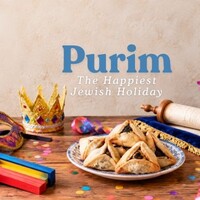
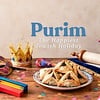
A traditional Purim pastry is the hamantasch, also known in Hebrew as oznei Haman. It is usually triangular in shape and filled with ingredients such as poppy seeds, chocolate, dates or another sweet filling. The triangular shape is often associated with Haman, although there are several explanations for the origin of this shape.
The Fast of Esther
The day before Purim, Ta'anit Esther, the Fast of Esther, is observed. This day commemorates the fast that Esther and the Jewish population observed before Esther approached the king. The fast takes place on the 13th day of Adar. When that day falls on Shabbat, the fast is observed on a different day.
When Is Purim Celebrated?
Purim is celebrated on the 14th day of the month of Adar. In most places, the celebration begins the evening before, because a Jewish day begins at sunset. In Jerusalem and other places traditionally considered walled cities, Purim is celebrated one day later, on the 15th of Adar. This is known as Shushan Purim. The difference goes back to the biblical story. In the city of Shushan, the Jews were given an extra day to defend themselves against their enemies. Therefore, the celebration there was established for the 15th of Adar.
Purim in a Jewish Leap Year
The Jewish calendar includes leap years in which an extra month is added. In such a year, there are two months called Adar: Adar I and Adar II. Purim is celebrated in Adar II. The 14th day of Adar I is known as Purim Katan, or "Little Purim." It is a minor and joyful day, but the full Purim celebration takes place in Adar II.
The Meaning of Purim
Purim is about much more than costumes, celebration and having fun. At its heart, Purim is about salvation, courage, identity and the survival of the Jewish people. Esther had to risk her life and reveal her Jewish identity in order to save her people. One fascinating aspect of the story is that the name of God is not explicitly mentioned in the Megillat Esther. Nevertheless, Jewish tradition places great significance on the way events unfold and ultimately lead to the salvation of the Jewish people. Purim therefore also has a deeper meaning. The holiday reminds us that events are not always what they initially appear to be, and that hope and salvation can sometimes come in unexpected ways.
Celebrating Purim in Israel
In Israel, Purim is a particularly joyful holiday. Children especially look forward to the costumes, celebrations and activities organized around Purim. Schools and families put a great deal of emphasis on costumes. Gifts are also exchanged and hamantaschen are enjoyed. As a native-born Israeli, Nati knows the special atmosphere of Purim in Israel from personal experience. It is a holiday in which tradition, family, creativity and fun come together in a unique way.
In Summary
Purim is one of the happiest Jewish holidays. During this holiday, the salvation of the Jewish population in the ancient Persian Empire is commemorated, as described in the Megillat Esther. The main traditions include reading the Megillah, giving gifts to friends and people in need, enjoying a festive meal and, of course, dressing up for Purim. Purim is therefore both a celebration of joy and togetherness and an opportunity to reflect on history, Jewish identity, courage and the salvation of the Jewish people.
As a native-born Israeli, Nati is happy to tell you more about Purim, the special traditions surrounding this holiday, and how Purim is celebrated in Israel.
For at home
You can also enjoy the cheerful atmosphere of Purim at home. Bamba with hazelnut filling (nougat) 60g is a popular Israeli snack. Bamba contains no preservatives or food coloring and is enriched with several vitamins.
Osem Bissli BBQ 70g is also a great addition to a festive Purim table. This crunchy Israeli wheat snack has a delicious BBQ flavor and is kosher.
For those who enjoy sharing something sweet, the Mini Halva Snacks, 18 x 12 g are a lovely choice. The pack contains small halva snacks in pistachio, vanilla and cocoa bean flavors. The snacks are vegan, kosher, and free from gluten and lactose.