 Blog
Blog

Hanukkah – What Is the Jewish Festival of Lights?
Hanukkah, also known as the Jewish Festival of Lights, is a celebration of light, hope and victory. It commemorates the rededication of the Temple in Jerusalem following the Maccabean revolt against Seleucid rule. According to Jewish tradition, this was also when the miracle of the oil took place. Hanukkah lasts eight days and begins on the eve of the 25th of Kislev, the third month of the Jewish calendar. During these days, candles are lit every evening. The light of Hanukkah symbolizes, among other things, the victory of light over darkness, purity over impurity, and spirituality over materialism.
As a native-born Israeli, Nati is happy to tell you more in his blog about the meaning of Hanukkah, the history behind this special holiday and the traditions that are still celebrated today.
What Is Hanukkah Also Called?
Hanukkah has several names and meanings. Each name tells us something about the background or significance of this special Jewish holiday.
The Festival of Lights
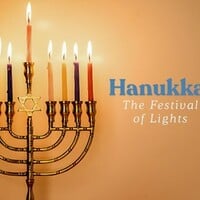
Hanukkah is often called the Festival of Lights. Light plays a central role during the eight days of Hanukkah. Every evening, the hanukkiah is lit. On the first evening, one light is lit, and one additional light is added each subsequent evening. On the eighth evening, all eight Hanukkah lights are lit. The hanukkiah is often placed near a window or in another clearly visible location. This allows the light to be seen by others and serves as a reminder of the miracle of Hanukkah.
The Festival of Heroes
Hanukkah is also associated with the courage of the Maccabees, a group of Jewish rebels who rose up against Seleucid rule. The Maccabees faced an enormous challenge. Despite being greatly outnumbered, they eventually managed to defeat the Seleucid forces and reclaim Jerusalem and the Temple. That is why Hanukkah also symbolizes courage, perseverance and remaining true to your faith and identity, even when circumstances are difficult.
The Festival of Miracles
Hanukkah is also closely associated with the miracle of the oil. According to traditional Jewish accounts, after the Maccabees recaptured and purified the Temple, they found only one jar of ritually pure oil. This amount of oil would have been enough to keep the menorah burning for just one day. However, it would take eight days to prepare new ritually pure oil. According to the tradition, a miracle occurred: the small amount of oil continued to burn for eight days. Hanukkah is celebrated for eight days in remembrance of this miracle.
A Great Victory
More than two thousand years ago, Judea was under the rule of the Seleucid Empire. The Seleucid ruler Antiochus IV Epiphanes introduced policies that suppressed Jewish religious practices and desecrated the Temple in Jerusalem. This led to the Maccabean Revolt, which was led by Judah Maccabee and his brothers, the sons of Mattathias (Matityahu) the Hasmonean. The Maccabees eventually succeeded in recapturing Jerusalem. The Temple was cleansed and rededicated. This rededication is central to the meaning of Hanukkah. The word Hanukkah literally means “dedication” or “rededication.”
In Jewish tradition, the victory is regarded as a remarkable liberation. Hanukkah therefore commemorates not only a historical victory, but also the preservation of Jewish faith, traditions and identity.
The Rededication of the Temple
The name Hanukkah refers to the rededication of the Temple in Jerusalem. After the Maccabees recaptured the Temple, it first had to be cleansed and restored for Jewish worship. On the 25th of Kislev, the Temple was rededicated. The rededication was celebrated for eight days. According to tradition, the menorah was also lit again at this time. It is important to distinguish between the menorah and the hanukkiah. The menorah in the Temple was a seven-branched lampstand. The hanukkiah used today during Hanukkah has eight lights for the eight days of the holiday and a ninth light, the shamash, which is used to light the other lights.
The Miracle of the Oil
The story of the oil is one of the best-known elements of Hanukkah. According to rabbinic tradition, after recapturing the Temple, the Maccabees found only one jar of pure olive oil suitable for lighting the menorah. The amount was enough for one day. Because it would take about eight days to prepare new ritually pure oil, this seemed to create a problem. According to the tradition, however, the oil continued to burn for eight days.
This miracle forms the basis for one of the most important Hanukkah traditions: lighting the Hanukkah lights for eight days. The story of the oil symbolizes hope and the idea that even a small amount of light can make a great difference.
Hanukkah and the Hanukkiah
One of the most important traditions during Hanukkah is lighting the hanukkiah. On the first evening, one Hanukkah light and the shamash are lit. On each following evening, one additional light is added. On the eighth evening, all eight Hanukkah lights are lit. The shamash is the additional light used to light the other lights. It is usually positioned slightly higher or lower than the other lights. The hanukkiah is often placed near a window or at the entrance to a home so that the light can be seen by others. This is known as pirsumei nisa, meaning the publicizing of the miracle.
The Dreidel
The dreidel is another well-known Hanukkah tradition. A dreidel is a four-sided spinning top with Hebrew letters on each side. Outside Israel, these are usually the letters Nun, Gimel, He and Shin. They refer to the words: Nes Gadol Haya Sham “A great miracle happened there.” In Israel, the dreidel usually has a Pe instead of a Shin: Nes Gadol Haya Po “A great miracle happened here.” Children especially enjoy playing with the dreidel during Hanukkah. The game has become a familiar part of the Jewish Festival of Lights.
Why Do We Eat Foods Cooked in Oil During Hanukkah?
Because oil plays such an important role in the story of Hanukkah, it is customary to eat foods prepared with oil during the holiday. In Israel, sufganiyot are especially popular. These are soft, deep-fried doughnuts, often filled with jam or another sweet filling and dusted with powdered sugar. Latkes, crispy potato pancakes fried in oil, are also a well-known Hanukkah tradition. By eating these foods, the miracle of the oil is remembered in a festive way.
Hanukkah Gelt and Gifts
Another well-known tradition is giving Hanukkah gelt, also known as Hanukkah money. Traditionally, children could receive money during Hanukkah. Today, many families also give children small gifts or chocolate coins. Chocolate coins wrapped in gold or silver foil are especially popular with children. The tradition of Hanukkah gelt is associated, among other things, with encouraging children to learn and perform good deeds. In some families, the money received is therefore donated entirely or partly to charity.
Hanukkah in Winter
Hanukkah falls on different dates each year according to the Gregorian calendar, but it always takes place in November or December. This means that Hanukkah takes place during the darkest time of the year. That is precisely why the image of the glowing Hanukkah lights is so meaningful. Outside, it gets dark early, while an additional light is lit inside each evening. The light grows throughout the eight days of Hanukkah. This makes the Festival of Lights a powerful symbol of hope: even during the darkest time, light can continue to grow stronger.
When Is Hanukkah?
Hanukkah begins every year on the 25th of Kislev according to the Jewish calendar and lasts for eight days. Because the Jewish calendar is a lunisolar calendar, Hanukkah falls on different dates each year in the Gregorian calendar. As with all Jewish holidays, a Jewish holiday begins at sunset. Hanukkah therefore begins on the evening before the first full calendar day.
Hanukkah – A Festival of Light, Hope and Tradition
Hanukkah is more than simply a holiday during which candles are lit for eight days. It is a celebration that looks back on an important period in Jewish history while also carrying a message of hope and perseverance. The victory of the Maccabees, the rededication of the Temple and the traditional story of the miracle of the oil together form the foundation of the holiday.
By lighting the hanukkiah, playing dreidel, eating foods prepared with oil and gathering with family and friends, Hanukkah traditions are passed down from generation to generation. As a native-born Israeli, Nati finds it special to share these Jewish holidays and traditions with you. In his view, Hanukkah beautifully shows how history, faith, family and tradition are connected.
Hanukkah is the Festival of Lights – a reminder that even a small light can overcome the darkness.
For at home
With the Colored Hanukkah Candles, you have everything you need at home to light the candles of the Hanukkiah during Hanukkah. The pack contains 44 colored candles – enough for all eight days of Hanukkah.
Bamba with hazelnut filling (nougat) 60g is also a popular Israeli snack. Bamba contains no preservatives or food coloring and is enriched with several vitamins.
With Osem Bissli BBQ 70g, you can enjoy a popular Israeli wheat snack at home. This crunchy snack has a delicious BBQ flavor and is kosher.